Snæfellsnes / planning notes
Snæfellsnes in winter (2026): roads & northern lights
Winter makes the peninsula feel larger because the useful light is shorter. Build a small daytime itinerary first; treat an aurora outing as a separate, conditional evening.
Compare tours: Compare tours →
Updated
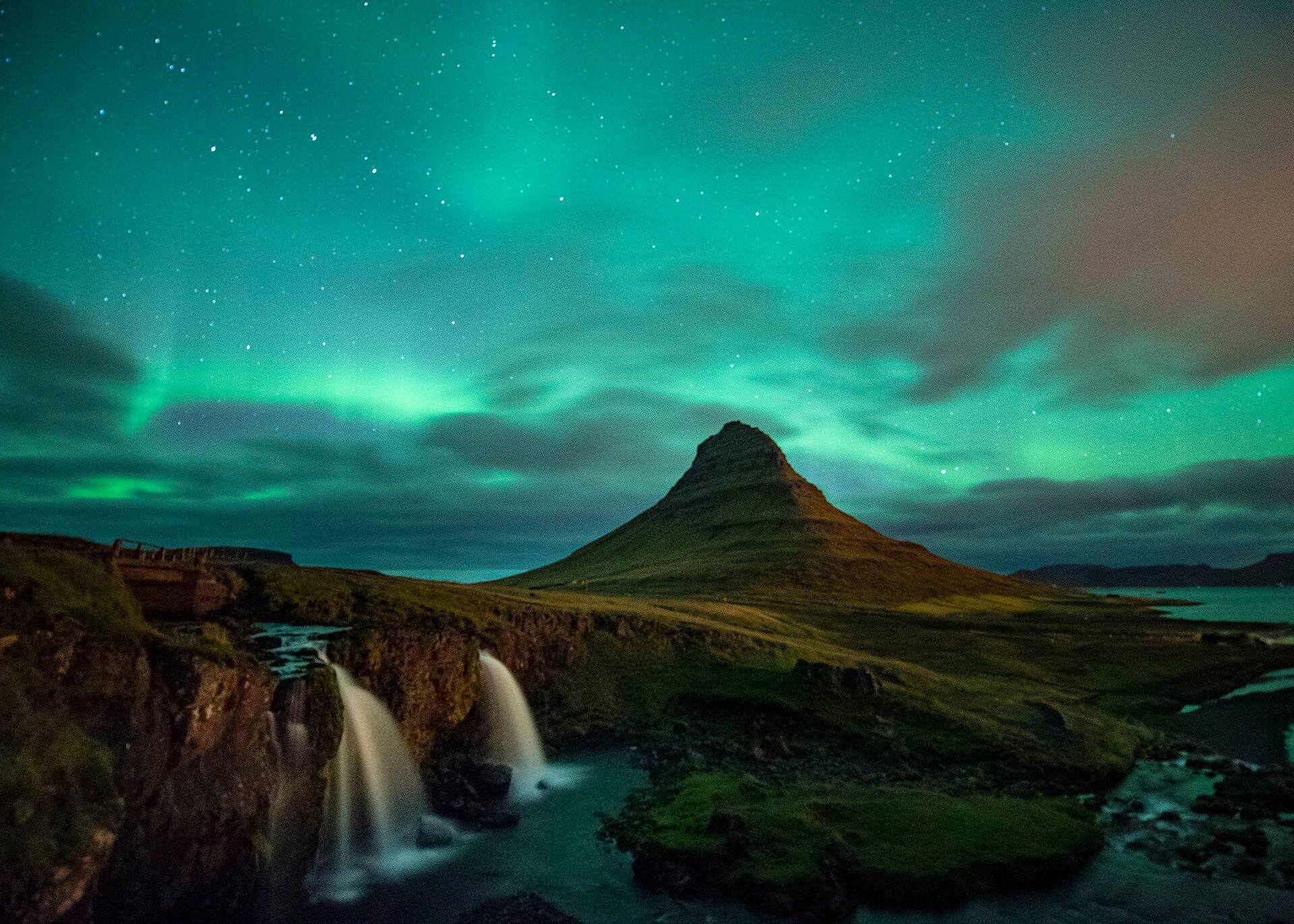
The short answer
Mid-December daylight at Arnarstapi is approximately 3 hours 49 minutes in our model. A full Reykjavík loop still means about 479 km of driving. Choose a guided day or stay locally, check wind and road warnings, and never assume a northern-lights sighting is included in a daytime sightseeing tour.
What short daylight means for the itinerary
Use the daylight window for the outdoor stop that matters most. A long approach from Reykjavík can happen largely before sunrise, while the return can be after sunset. That does not make every winter day unworkable, but it changes what a realistic day contains.
Our daylight figures are calculated for Arnarstapi around the middle of each month, not measured weather or a promise of clear light. Twilight can extend visibility, while cloud, precipitation and blowing snow can reduce it. Compare dates and actual conditions rather than treating a monthly number as a driving permission.
Choose road conditions before choosing viewpoints
Check the official road map and SafeTravel alerts before departure and again when conditions change. Pay attention to wind as well as ice. A rented four-wheel-drive vehicle does not remove the effect of strong gusts, poor visibility or a closed route.
Keep enough margin to turn back, and avoid making a paid activity the reason to continue into an unsafe forecast. Ask a guide or accommodation host about local conditions without treating informal reassurance as a replacement for official warnings. Park only in designated places and keep lights and reflective equipment available for stops in darkness.
A winter version of the sightseeing day
Prioritise Arnarstapi viewpoints and Kirkjufell when conditions permit, with a visitor-centre stop as an indoor option. Djúpalónssandur needs particular care around waves and slippery approaches; an exposed black beach is not a place to chase a dramatic photograph close to the water.
As of the park’s 13 October update, Djúpalónssandur toilets are closed for winter. From 31 October 2026, the published visitor-centre hours are 10:00–16:00 at Hellissandur and 11:00–16:00 at Malarrif. The park says outside visitor-centre toilets remain available around the clock. Check the latest notice for holiday changes.
Northern lights: darkness, cloud and activity
A dark sky alone is not enough. You also need a sufficiently clear view and auroral activity. The Icelandic Meteorological Office combines cloud maps with its aurora forecast; inspect both before deciding whether an evening outing is worthwhile. A high activity number behind thick cloud is not a guaranteed display.
Stay at a legal, safe location with a clear view and permission to park. Do not stop suddenly on a road when the sky changes. Keep an ordinary evening plan and be willing to end the search. A photograph can show colour more strongly than the naked eye, so compare tour descriptions carefully when deciding what experience to expect.
Does a Snæfellsnes day tour include aurora watching?
Usually these are different products. Day sightseeing tours focus on the peninsula and return to Reykjavík after a long circuit. An aurora tour may depart separately from Reykjavík and follow the cloud forecast in a direction that is not west. Do not book one on the assumption that it must reach Snæfellsnes.
A two-day west-Iceland itinerary can provide an overnight opportunity, but the listing must explicitly describe any aurora activity. Read the conditions for rebooking after a failed sighting, and distinguish a weather cancellation from an outing that operates without seeing lights. We do not list an unverified dedicated westbound aurora departure.
When to add a local overnight
An overnight reduces the pressure to cover the whole peninsula and return to Reykjavík in one short winter day. Choose your accommodation area around the next day’s first stop, then keep the actual route flexible. Confirm food and fuel options rather than relying on summer opening patterns.
Pack warm waterproof layers, grippy footwear, gloves and a charged phone. Leave a written plan with someone and know your operator’s meeting details. These preparations make a shorter itinerary more comfortable; they do not justify continuing when weather or roads deteriorate. It is entirely reasonable to spend a bad-weather day in town instead.
Sources & last checked
Checked 20 October 2026. Prices, access and transport can change; confirm with the linked official source before travelling.
Plan your trip
Compare tours
Check current dates, inclusions and availability on GetYourGuide.
We may earn a commission on bookings through these links. How this works.