Beaches · National park
Djúpalónssandur, the black pebble beach
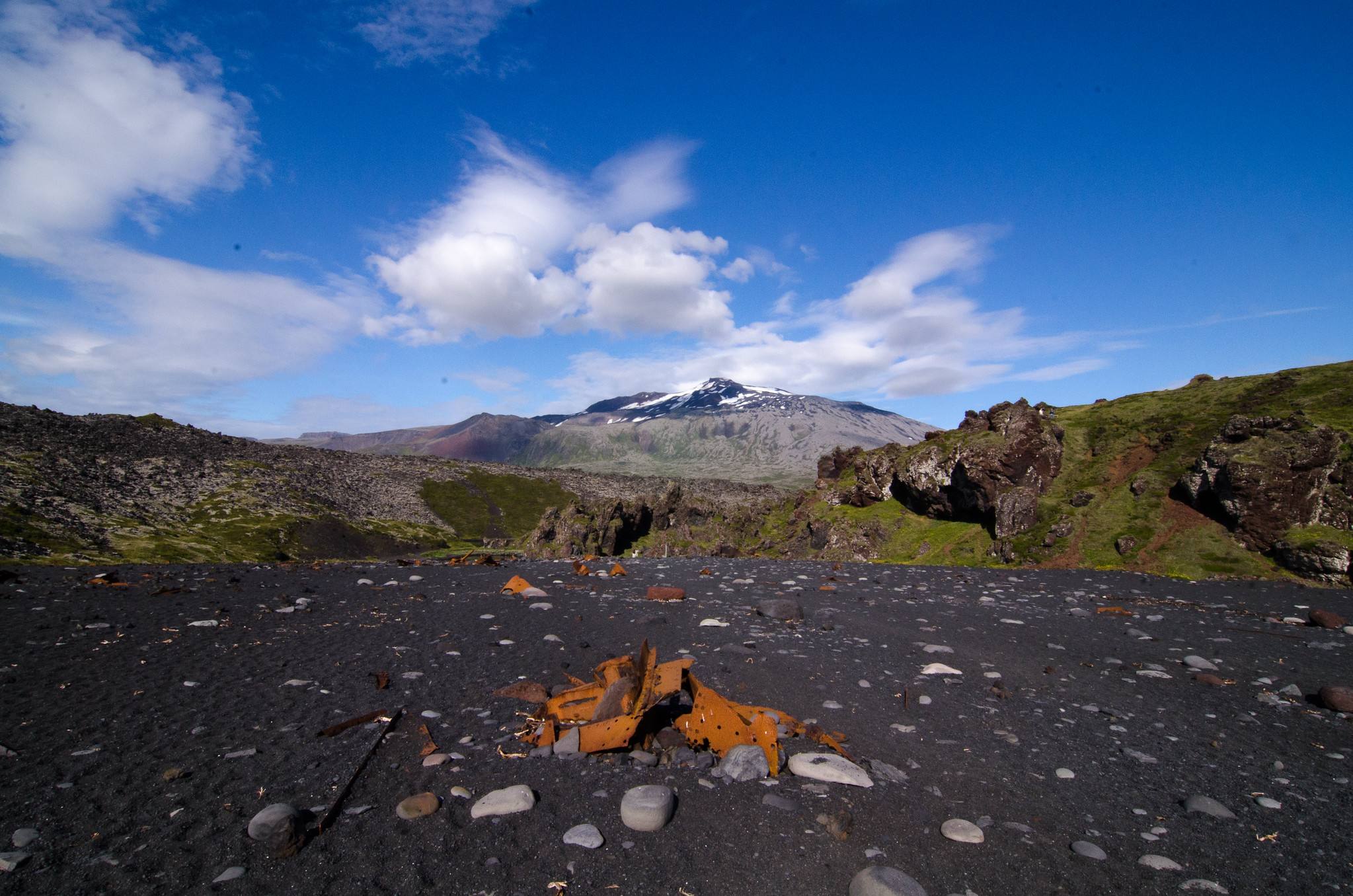
A cove of smooth black pebbles under the glacier, with the rusting remains of a 1948 trawler and four stones that once decided who was strong enough to row.
What you’ll find
From the car park by road 574 a path drops through lava to the beach, past the lagoon that gives the beach its name (djúpalón, “deep lagoon”). The beach itself is not sand but rounded black pebbles, loud underfoot and when the waves pull back. The iron scattered across it is from the English trawler Epine GY-7, which ran aground east of Dritvík in March 1948.
The lifting stones
By the path lie four stones that crews from the fishing station at Dritvík are said to have used to test their strength:
| Stone | Meaning | Weight |
|---|---|---|
| Fullsterkur | “Full strength” | 154 kg |
| Hálfsterkur | “Half strength” | 100 kg |
| Hálfdrættingur | “Weakling” | 54 kg |
| Amlóði | “Bungler” | 23 kg |
Weights from Snæfellsjökull National Park.
Walk to Dritvík
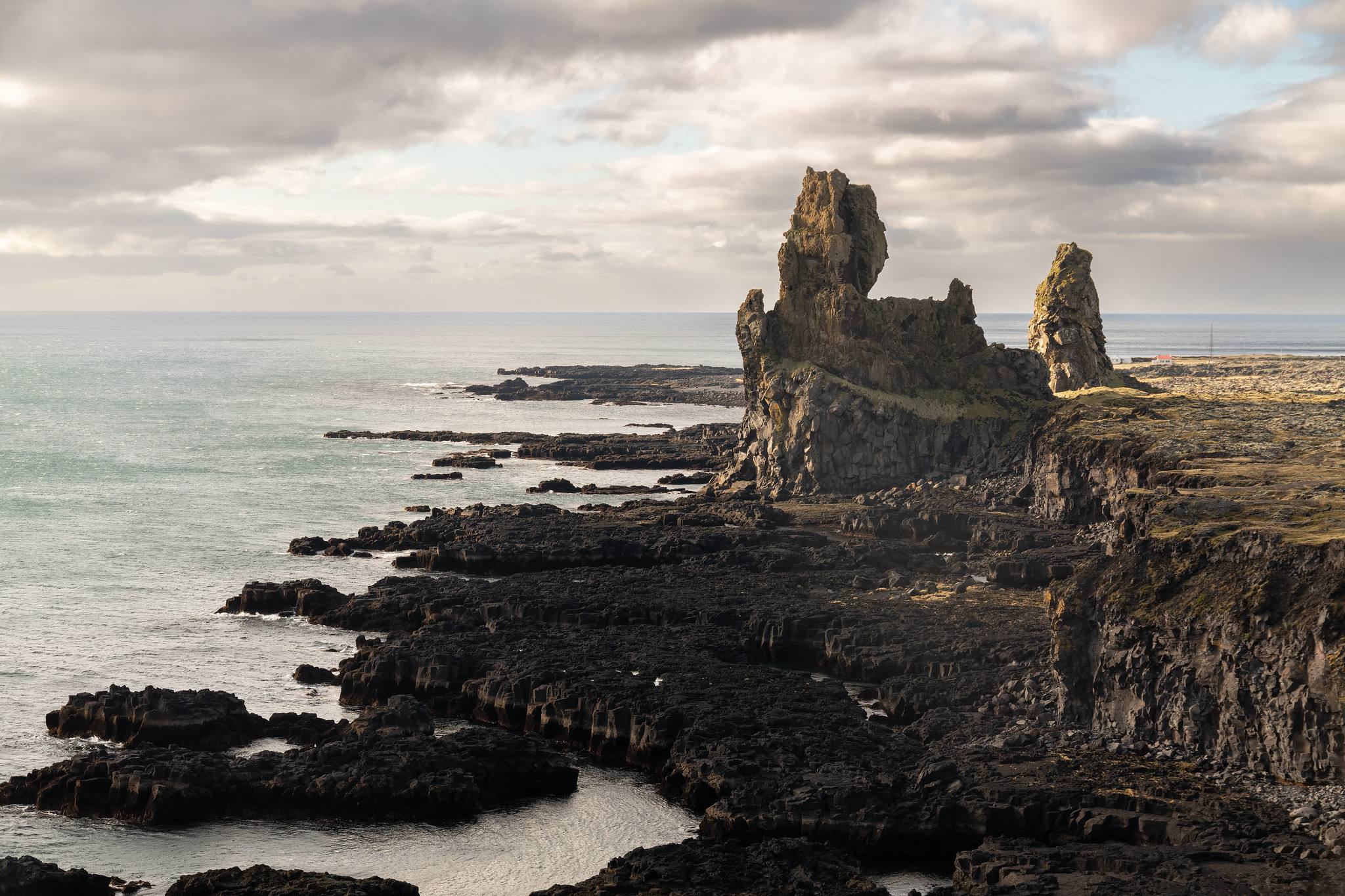
A path leads over the rocks to the next cove, Dritvík: 1 km and about 20 minutes, reachable only on foot. In the age of rowing boats it was one of the biggest fishing stations in Iceland, home to as many as 600 seasonal fishermen. A longer 2 km trail crosses the lava from the upper car park.
Parking, toilets, access
- Fee: the park service fee, ISK 1,100 per car in 2026, paid once a day for all park car parks (Parka app, QR code or the Malarrif kiosk).
- Toilets: by the upper car park, summer only; closed from 13 October 2026 until spring.
- Access: the Dritvíkurvegur access road was rebuilt and reopened in June 2025. There is a wheelchair-accessible viewing platform.
Questions people ask
Can you swim at Djúpalónssandur?
No. Wading and swimming are forbidden: the water gets deep fast, the surf is heavy and the undertow is strong. Keep well back from the waterline and never turn your back on the sea.
What are the lifting stones?
Four rounded stones by the path to the beach, traditionally used to test the strength of fishermen: Fullsterkur (154 kg), Hálfsterkur (100 kg), Hálfdrættingur (54 kg) and Amlóði (23 kg). Lift with your legs, not your back.
What is the wreckage on the beach?
Iron debris, mostly from the English trawler Epine GY-7, which ran aground east of Dritvík in March 1948. Leave it where it lies.
Is there a fee?
Djúpalónssandur is inside Snæfellsjökull National Park, so the park’s service fee applies: ISK 1,100 for a car in 2026, valid at every park car park until midnight.
Are there toilets?
By the upper car park in summer. They closed for the winter on 13 October 2026; the nearest are at the Malarrif visitor centre.